Reflections from the Klosters Forum: exploring “What if Nature Had Creative Agency?” with Earth Percent
Most environmental work still treats nature as a subject: a backdrop, victim, or cause to defend. At the Klosters Forum in Switzerland this year, Agency For Nature co-creator Lisa and Cathy Runciman from EarthPercent ran a workshop that started somewhere else. What if nature isn't the cause, but the collaborator? What if it has ‘creative agency’ of its own?
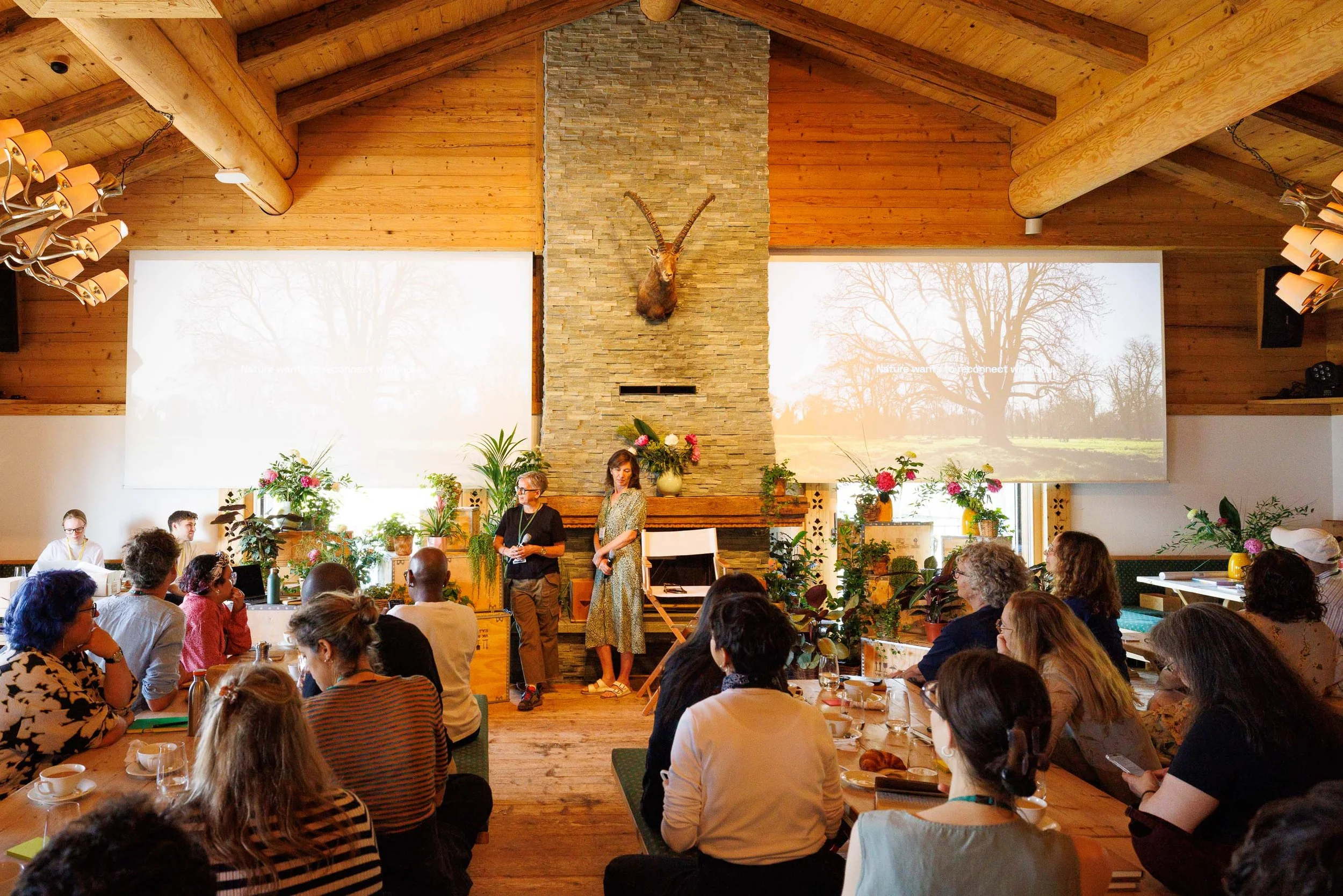
Photo credit: Magnus Arrevad, Klosters Forum
Forty-five people turned up on a Friday morning to sit with that question. It sounds simple, but as we learned in the room, taking time to sit with it throws up some rich reflections.
The session opened with two short films. Our Agency for Nature season 2 video shows what happens when the creative industries bring nature deeper into youth culture as a real partner - across gaming, football, goth, drag and more. Sounds Right, from EarthPercent, takes the same idea into music and asks what it would mean to credit nature as an artist in its own right. Both initiatives make the same move: nature stops being the subject of the work and becomes a key part of it.
Then, we invited everyone outside to sit with these ideas in nature. Ten minutes, in silence, each person with one element of the natural world - a blade of grass, a spider's web, a mountain - asking one question: what does it say? Despite only having 10 minutes for the exercise, people came back visibly moved. Some to tears, some to a kind of calm. It was emotional and evidence that you have to feel this connection to nature for yourself, you cannot just ask people to logically think about it.
Sam Lee was then invited to share the way in which he collaborates with nature in his music, this acted as inspiration for everyone in the room, you can read more about his brilliant work here.
Unearthing what came up
We then split the room into four groups, each looking at the same question from a different angle: the people who make creative work, the people who think and research, the people who fund and commission, and the people who build things (like infrastructure and community). They worked separately, then brought their provocations back. Across all four, the same thread kept surfacing. Nature already has something to say - the real question is whether we've built the conditions to hear it.
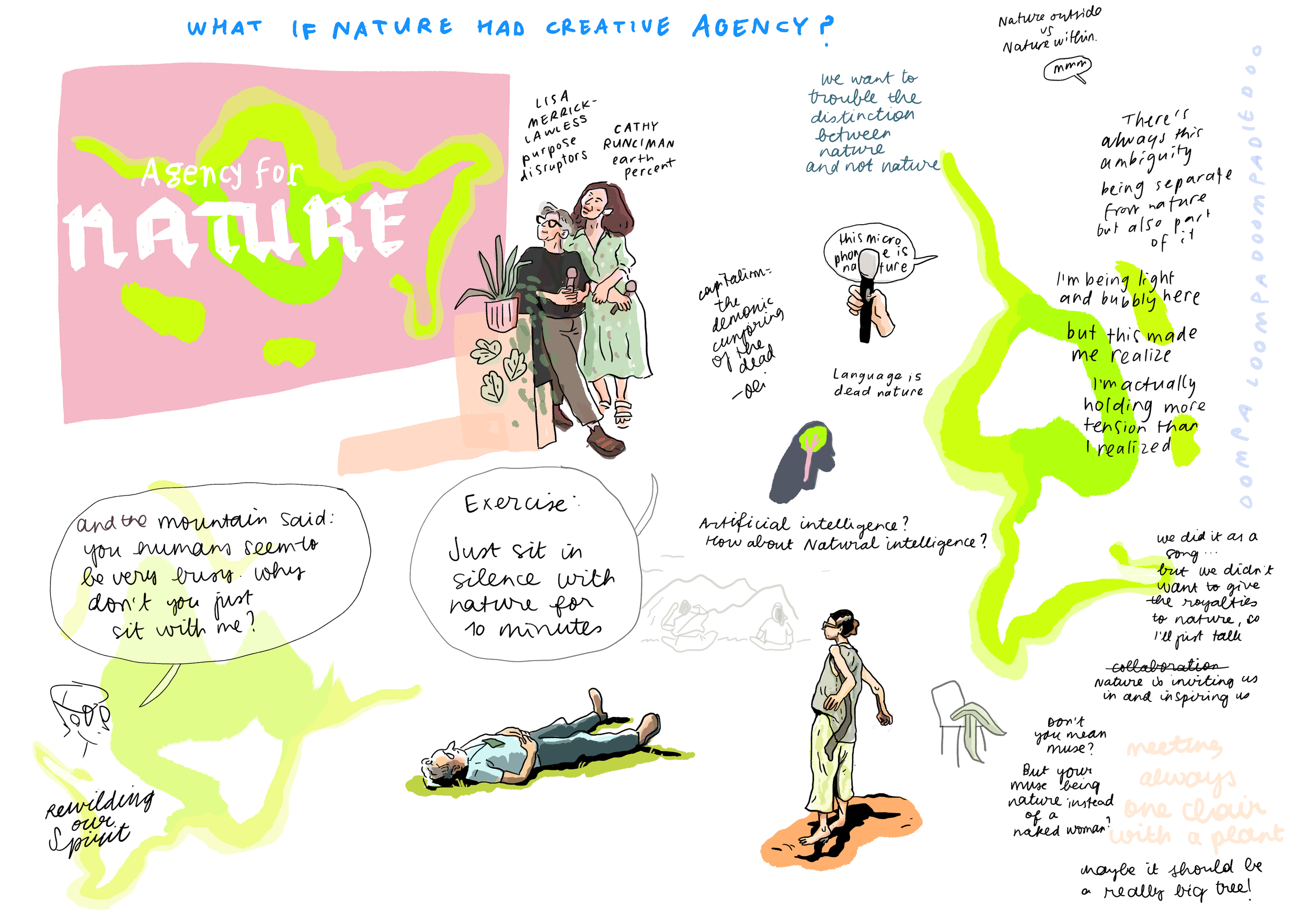
Illustration credit: Menah Wellen
The creators went first, and started by rejecting the premise. "Collaboration" didn't feel like the right word, they said, because nature is already inside all of their work - inviting them in, doing most of the storytelling. As one said, “nature is the best storyteller for all of us." One filmmaker put it best: he sets out to film one thing, and "nature ends up telling you a way more interesting story than the one you had in your pathetic imagination." They named the hard parts too. Nature is valued in money only once it's dead. And working with it means protecting the people who protect the land, not just the pretty pictures of it.
The thinkers went to language. Our current language, they argued, is “dead nature” - words that are products of thought rather than of life. So they swapped them out. Murmuration instead of leadership, natural intelligence instead of artificial intelligence. Integration instead of development, so a new house is something that keeps a place alive rather than something built over it. The same swap in money: the social return on nature, alive, against the financial return on nature, dead. They warned each other to watch for appropriation - see how fully a word like "ecosystem" has already been swallowed by business.
The facilitators went to power. Who actually speaks for nature in a boardroom, or in a funding decision? Their answer was to put nature at the head of the table, through real channels of connection, and through messengers (artists, indigenous knowledge, people trained to listen) who carry back what they hear. As one said, “Let the decisions get muddy”: more emotional, more willing to take a risk. There are live examples already: Nature on the Board, the Earth Law Centre, Lawyers for Nature and others.
The builders brought the body back in. Soil health and gut health are tangled together, they pointed out - so match soil biomes with gut biomes in community gardens and city farms, and make our dependence on the living world something you can see and taste. They talked about degrees of wild, from deep wilderness to an urban footpath. About buildings that carry the sounds and smells of real ecosystems. About one question worth taking home: what would it take to rewild our spirit - and (our favourite), what would the mountain need to live its best life?
We've written before about nature as subject versus nature as author. This workshop took that question out of theory and into a room full of people who think, fund, create and build. The answer they kept arriving at wasn't that nature needs us to give it a voice. It has one. We just need to give it the mic.
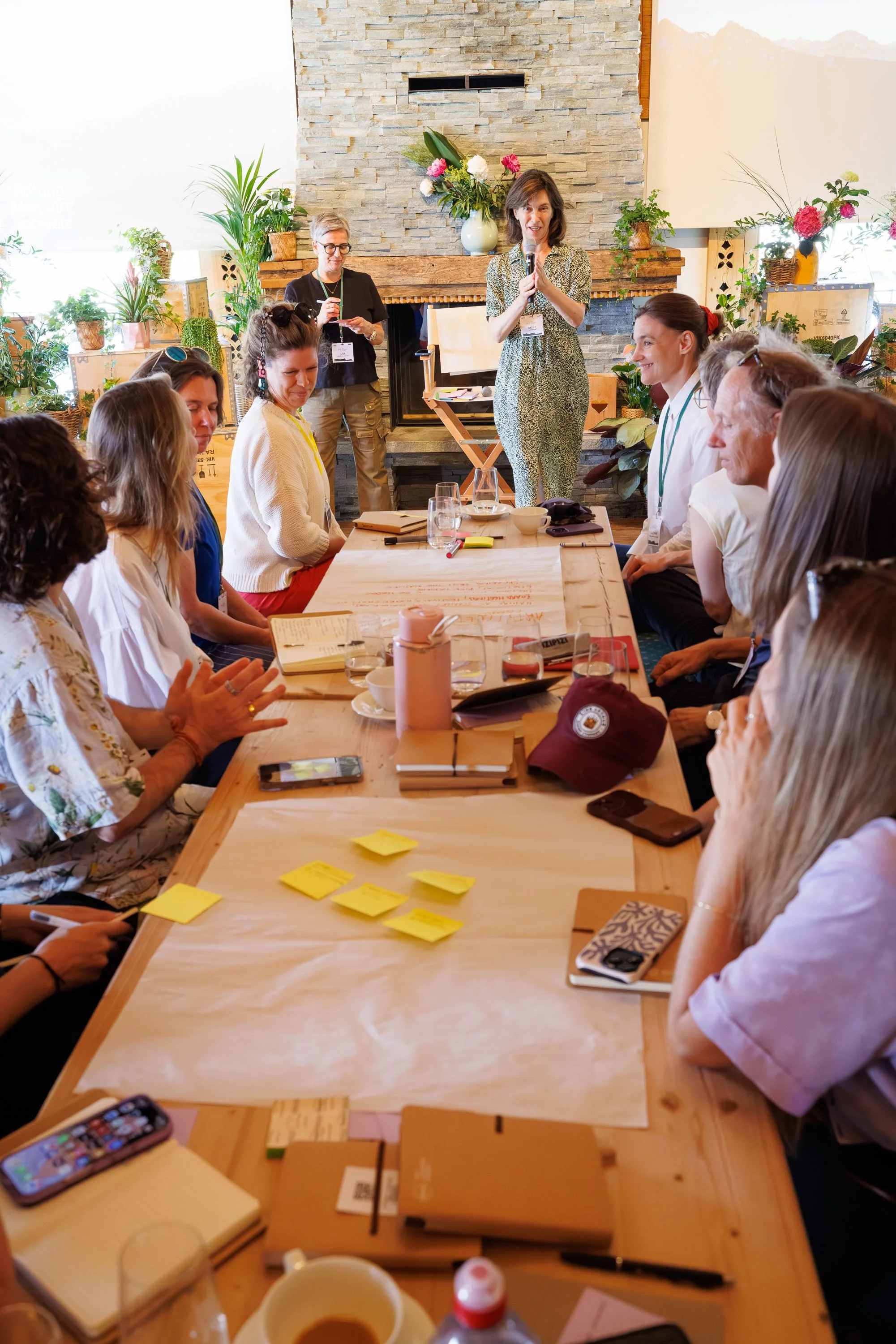
We’re not done there though: we’ll be
touring this workshop to give more people a chance to reflect on nature’s role in their work. Next up: Blue Earth Summit 2026 in London on October 14th, where we’ll host an evolved workshop for attendees. You can read more about the summit and book your spot here.
You can also read more about the Klosters Forum and what emerged from this year’s gathering of 80 leaders at the intersection of Nature x Culture in their newly published report TKF26: The Cultural Turn.
Photo credit: Magnus Arrevad, Klosters Forum